
Peak traffic without Queue-it
Scaling costs surge exponentially
Bottlenecks fail, causing crashes & overselling
Teams scramble to stabilize systems
Customers complain & fill support lines
Peak traffic with Queue-it*
33%+ savings on server & database scaling
94% of customers prevent site performance issues
81% of customers say running sales is less stressful
71% see fewer complaints during sales
*Based on 203 survey responses from Queue-it customers (2025).
- Prevent traffic spikes from exceeding system capacity and triggering crashes, slowdowns, and issues like overselling or timeouts
- Control traffic flow in real time to match capacity, optimize costs, and prevent overload
- Set up automatic protection for planned and unplanned spikes across your website, key pages, specific bottlenecks, or third-party services
- Deliver a fair, branded visitor experience during peaks with a fully customizable waiting room and real-time wait information
- Prevent overload across dynamic systems that are slow, difficult, or expensive to scale, including databases, payment gateways, and third-party bottlenecks
- Ensure traffic is distributed at a rate your backend systems can reliably handle
- Control session duration and validity in peak scenarios to free up capacity as users complete their journeys
- Stop one system failure from taking down the rest of your stack
- Automate protection so it activates the moment traffic exceeds your threshold, without manual intervention or round-the-clock human monitoring
- Unify control across traffic sources in a single dashboard, with instant throughput adjustments as conditions change
- Stabilize systems on demand by pausing or throttling incoming traffic during incidents while communicating directly with waiting visitors in real time
- Turn every event into insights with real-time dashboards and post-event analytics that reveal traffic composition and event performance
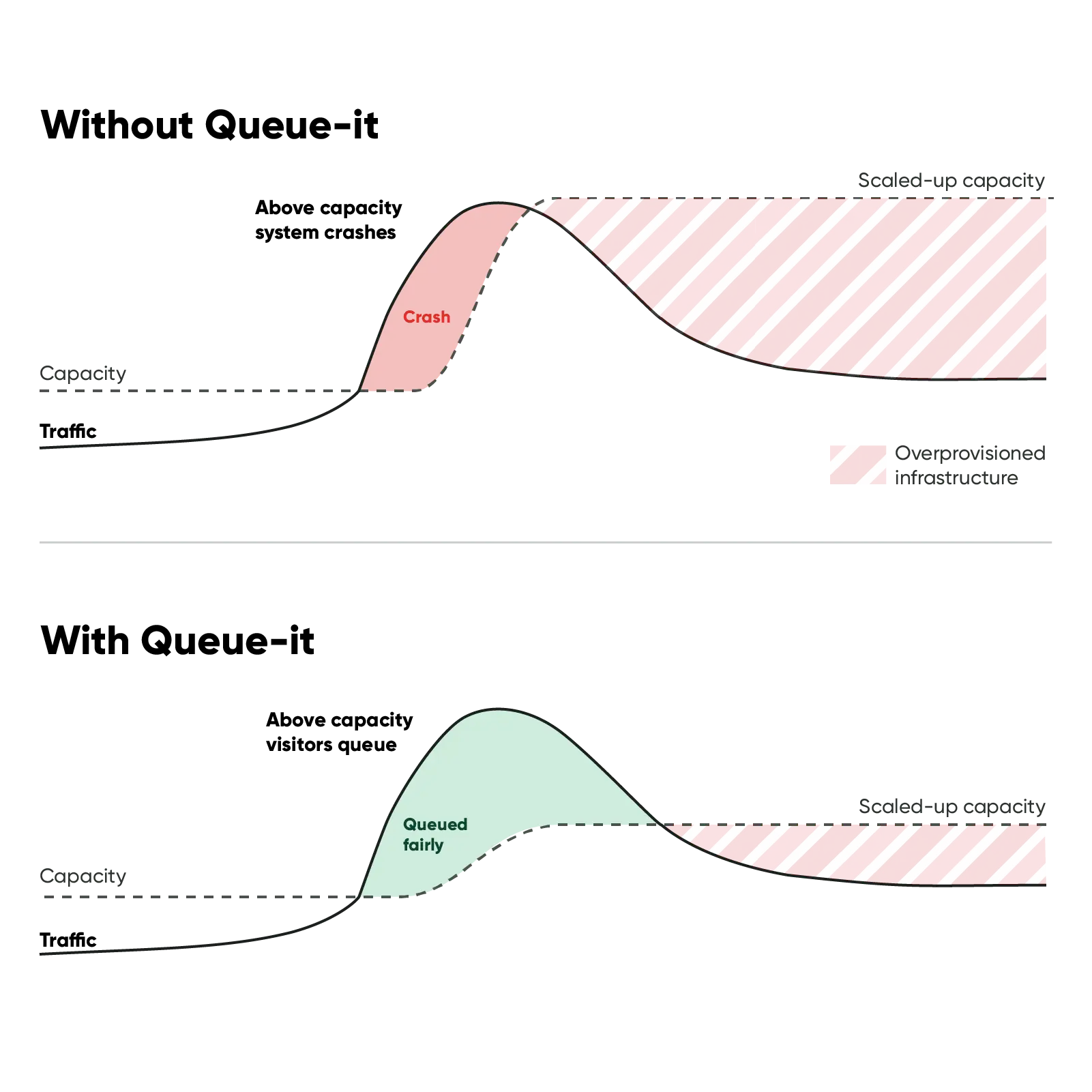
- Use a dedicated traffic control layer instead of relying on reactive autoscaling
- Prepare for peak demand without re-architecting or overprovisioning infrastructure
- Keep systems stable during high-intensity traffic spikes and unpredictable surges
- Run closer to optimal capacity without risking downtime during critical moments
94%
of Queue-it customers say they've prevented site performance issues from peak traffic
88%
of Queue-it customers say their customers' online experience has improved
84%
of consumers prefer an online queue with wait information to a website crash or error page

"Our server is almost completely free from downtime after introducing Queue-it. The website stays online no matter the traffic and captures every sale..”
JUNJI HAYASHI, CEO OF MAXIM CO.

“The waiting room creates a more organized experience in high traffic situations. Before Queue-it, we went down several times. Since Queue-it, we’ve had no downtime at all.”
Mijail Paz, Head of Technology

“Passports is one of the biggest digital services in the U.K., and we don’t collapse under pressure. Since we’ve had Queue-it we haven’t even come close. To be able to say we’ve had zero outages in the face of what was at least triple the amount of demand that we would expect is amazing. It's a really, really positive thing.”
Kevin Lewis, Product Manager
*Based on 203 survey responses from Queue-it customers (2025) and a survey of 1,000+ global consumers (2025).

24/7 Protection
Activate traffic control automatically when demand exceeds safe thresholds
Automate protection

Scheduled Waiting Room
Control high-demand events while ensuring fairness and reliability
Run better events

Traffic Intelligence
Monitor and adjust traffic flow in real time with complete visibility
Increase visibility

Bots & Abuse Protection
Protect your customers & website from bot-driven spikes in traffic
Block bad bots





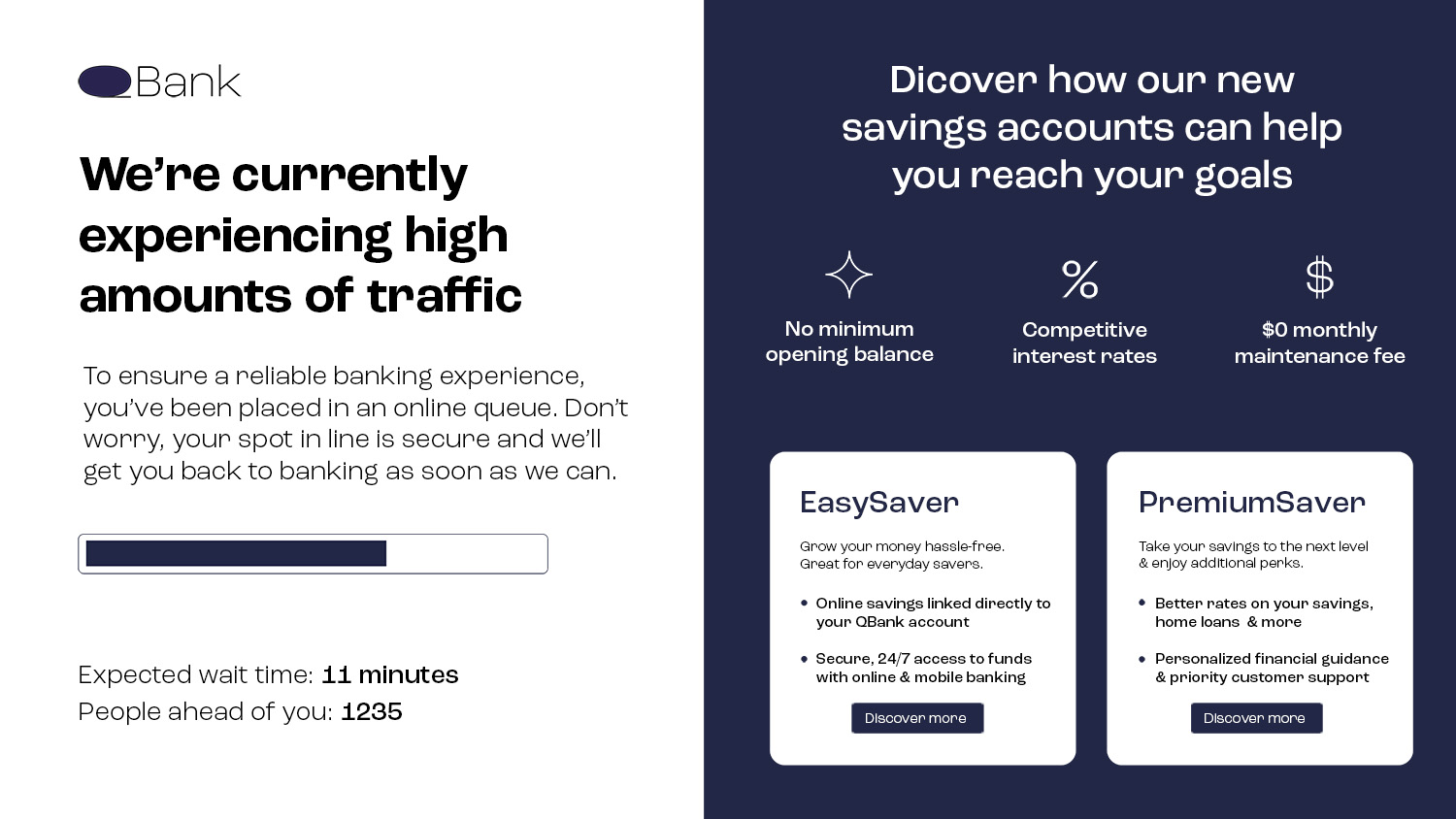
When traffic exceeds the capacity you’ve set, Queue-it activates a waiting room that holds excess visitors on its own infrastructure and flows them to your site at a rate your systems can handle. Bottlenecks like databases, logins, and payment gateways never receive more traffic than they can process, so spikes don’t turn into crashes, slowdowns, or oversold orders. 94% of Queue-it customers say they’ve prevented site performance issues from peak traffic.
Load balancers and virtual waiting rooms solve different problems. In high-demand scenarios, one doesn’t replace the other. A load balancer is stateless and distributes requests across servers. It scales well, but it doesn’t control traffic volume. It passes requests through, even if your backend or third-party services can’t handle the load. If capacity is exceeded, users hit HTTP 429 errors, timeouts, or degraded performance.
Queue-it’s virtual waiting room controls the flow of incoming traffic, ensuring your systems don’t exceed capacity. During spikes, it offloads visitors to Queue-it’s infrastructure and lets them through in a controlled, fair order while providing estimated wait times and a branded experience.
In short, the virtual waiting room protects your stack during peak situations, and load balancers help scale what traffic is allowed through. Most resilient systems use both.